Komponen Utama Perjalanan Coaster
Memahami komponen utama perjalanan coaster membantu dalam perencanaan dan penganggaran. Setiap komponen memainkan peran penting dalam perjalanan fungsi, keamanan, dan faktor sensasi. Berikut rincian lengkap bagian-bagian penting, peran mereka, dan perkiraan biaya (berdasarkan keluarga biasa atau tatakan gelas berukuran sedang — seperti a Cacing Aneh atau perjalanan kecil yang menegangkan).
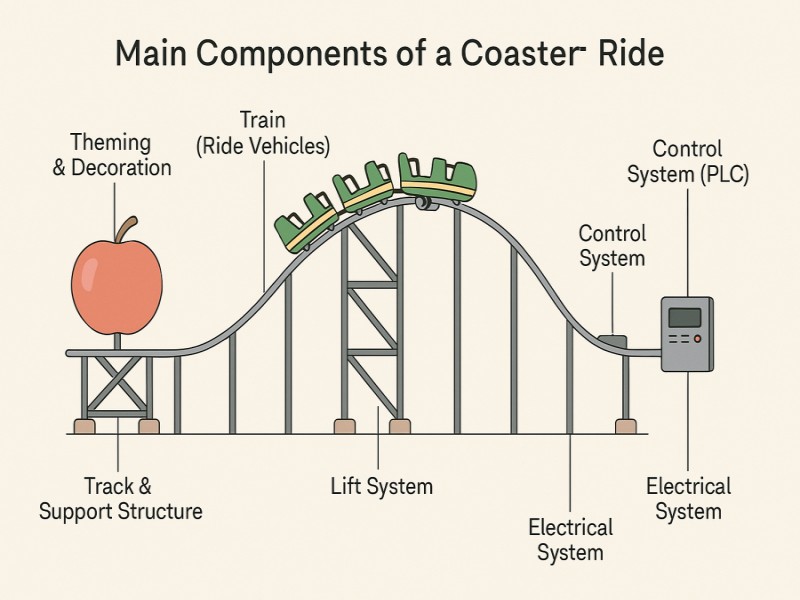
| Komponen | Peran | Perkiraan Biaya (Rp) |
|---|---|---|
| 1. Melacak & Struktur Pendukung | Membentuk jalur perjalanan; termasuk kurva, berenang, perbukitan. Mendukung menjaganya tetap stabil dan aman. | $30K – $500K |
| 2. Kereta (Naik Kendaraan) | Membawa penumpang di sepanjang lintasan. Dirancang untuk kenyamanan, keamanan, dan kapasitas. | $20K – $300K (1–2 kereta) |
| 3. Sistem Angkat (Angkat rantai, penggerak ban, atau sistem peluncuran) | Memindahkan kereta ke ketinggian atau kecepatan awal. Peluncuran tatakan gelas melewati bukit lift. | $8K – $300K (angkat rantai: lebih rendah; meluncurkan: lebih tinggi) |
| 4. Sistem Pengereman | Memperlambat dan menghentikan kereta di akhir. Termasuk magnet, gesekan, atau rem udara. | $5K – $50K |
| 5. Sistem Kontrol (PLC) | Otak perjalanan – menangani sensor, logika berkendara, waktu, dan pemberhentian darurat. | $10K – $100K |
| 6. Sistem Kelistrikan | Memberi kekuatan pada perjalanan, penerangan, kotak kendali, motor, dan sistem keselamatan. | $5K – $50K |
| 7. Tema & Dekorasi | Daya tarik visual – elemen fiberglass, lukisan, alat peraga, terowongan, dll.. | $10K – $500K (opsional) |
| 8. Yayasan & Pekerjaan Sipil | Pijakan beton di bawah lintasan dan kolom. Diperlukan untuk keamanan struktural. | $20K – $300K (bervariasi menurut tanah dan ukuran wahana) |
| 9. Keamanan & Sistem Pengekangan | Memanfaatkan, palang pangkuan, sabuk pengaman, anti-kembalikan, dll.. | Termasuk dalam biaya kereta atau tambahan $5K – $30K |
| 10. Alat Perawatan & Suku cadang | Roda pengganti, sensor, dan peralatan untuk pemeliharaan. | $2K – $20K |
| 11. manual, dokumen & Panduan Instalasi | Termasuk petunjuk pemasangan, manual pengoperasian, dan rencana pondasi. | Biasanya disertakan |
Mengapa Menyesuaikan dengan IP atau Desain Bertema?
Memilih roller coaster bertema atau berbasis IP lebih dari sekadar menambah daya tarik visual—hal ini dapat mengubah popularitas dan keuntungan taman Anda. Saat Anda menyelesaikan perjalanan dalam film yang disukai, kartun, atau cerita asli (bayangkan coaster “Jurassic World” Universal atau wahana bertema karakter Disney yang tak terhitung jumlahnya), ini segera menjadi atraksi yang wajib dilihat dan menghasilkan gebrakan baik di taman maupun di media sosial.
Beberapa manfaat berbeda termasuk:
- Peningkatan Kehadiran: Tema ikonik memiliki kekuatan untuk menarik pengunjung baru dan pengunjung berulang, mengubah coaster Anda menjadi tujuan tersendiri.
- Kemampuan untuk dibagikan: Wahana bertema magnet Instagram dan TikTok, memperkuat pemasaran dari mulut ke mulut dan membantu taman Anda menjadi tren online dengan setiap selfie tamu atau video perjalanan.
- Identitas Unik: Desain IP khusus memastikan kendaraan Anda menonjol dari model umum, membuat taman Anda berkesan dan berbeda di pasar yang ramai.
- Peningkatan Pengeluaran: Tamu yang tertarik dengan wahana tematik lebih cenderung membeli merchandise terkait, makanan ringan, dan suvenir, meningkatkan pendapatan secara keseluruhan.
- Daya tarik luas: Tema yang dipilih dengan baik selaras dengan keluarga, remaja, dan penggemar berat, membantu Anda menarik banyak orang.
Untuk taman yang bertujuan memaksimalkan pengalaman tamu dan potensi bisnis, berinvestasi pada roller coaster bertema atau berbasis IP sering kali merupakan cara paling cerdas—menyeimbangkan nilai hiburan, publisitas gratis, dan keuntungan ekonomi jangka panjang.
Bagaimana Pilihan Material Mempengaruhi Biaya Perjalanan Coaster
Memilih antara baja dan kayu untuk roller coaster Anda adalah salah satu keputusan terbesar yang akan Anda hadapi—dan bagaimanapun juga, hal tersebut memiliki label harga yang mahal.. Bahan tidak hanya memengaruhi tampilan dan rasa berkendara; mereka mendorong biaya dan umur panjang, juga.
Tatakan Gelas Baja:
Baja adalah pilihan terbaik untuk kelancaran, tata letak perulangan dan desain liar seperti yang Anda lihat di B&Mesin sensasi M atau Intamin. Baja menawarkan daya tahan yang unggul, tikungan yang intens, dan menurunkan pemeliharaan di kemudian hari, tapi Anda akan membayar fasilitas itu. Tatakan gelas baja sering kali dimulai dari sekitar $7 juta dan bisa terbang melewatinya $20 juta untuk atraksi yang lebih besar dengan elemen khas atau kereta khusus.
Tatakan Gelas Kayu:
Kayu itu klasik—bayangkan kegembiraan Topan di Coney Island atau raksasa kayu dari Great Coasters International. Tatakan gelas kayu biasanya biaya pembuatannya lebih murah, berkat bahan yang lebih murah dan struktur pendukung yang lebih sederhana. Untuk perjalanan kayu berukuran sedang, Anda mungkin melihat biaya di $3 juta–$6 juta jangkauan. Namun, mereka seringkali membutuhkan perawatan yang lebih teratur, pengecatan ulang, dan penggantian papan sesekali agar tetap berjalan dengan aman.
Pengambilan Kunci:
- Baja = biaya dimuka yang lebih tinggi, perawatan yang kurang rutin, perjalanan lebih mulus, bentuk yang lebih kompleks.
- Kayu = biaya konstruksi lebih rendah, nuansa klasik, pemeliharaan yang lebih berkelanjutan, dan batasan pada elemen ekstrim.
Pilihan material bukan hanya soal anggaran—tetapi juga menentukan keseluruhan pengalaman tamu Anda dan berdampak pada biaya pengoperasian jangka panjang, jadi pertimbangkan pilihan Anda dengan hati-hati sebelum berkomitmen pada pondasi beton dan pengiriman pertama balok baja atau papan kayu.
Desain & Biaya Rekayasa
Sebelum satu balok dibaut atau ditambahkan percikan cat, setiap proyek tatakan gelas dimulai dengan fase desain dan rekayasa yang penting. Tahap ini meliputi sketsa konsep, 3rendering D, perhitungan teknis, dan banyak revisi bolak-balik dengan para insinyur untuk memastikan bahwa perjalanan ini tidak hanya mengasyikkan di atas kertas tetapi juga benar-benar aman, patuh, dan dapat dibangun.
- Pengembangan Desain: Ini termasuk memimpikan temanya, tata letak, dan estetika keseluruhan—bayangkan model 3D yang penuh warna, tikungan kreatif, dan siluet tatakan gelas yang khas.
- Layanan Rekayasa: Insinyur struktural kemudian melakukan keajaiban mereka, menghitung angka-angka sehingga setiap penurunan dan putaran tetap aman di jalurnya dan memenuhi kode keselamatan lokal dan internasional.
Kisaran Biaya: Untuk perjalanan keluarga atau ukuran menengah pada umumnya, mengharapkan fase desain dan rekayasa penuh dapat dijalankan di mana saja $200,000 ke $1 juta. Kisarannya tergantung pada hal-hal seperti:
- Kompleksitas tata letak dan tema trek
- Jumlah revisi desain yang diperlukan
- Lokasi geografis dan persyaratan kode lokal
Ini mungkin tampak besar dan kuat, namun berinvestasi pada desain yang kokoh dan teknik yang kokoh menentukan landasan bagi keandalan, menggembirakan, dan pengendaraan yang aman—apakah Anda menginginkan Wacky Worm yang sederhana atau sesuatu yang cukup memutar hingga membuat insinyur Six Flags tersipu malu.
Apa yang Dilakukan Setiap Komponen
1. Melacak & Struktur → Mendefinisikan pengalaman berkendara
2. Kereta → Memindahkan tamu dengan aman sepanjang perjalanan
3. Angkat/Luncurkan → Memberikan energi awalnya pada perjalanan
4. Rem → Memastikan deselerasi yang aman di akhir
5. Sistem Kontrol → Jalankan perjalanan dengan aman dan otomatis
6. Listrik → Memberdayakan segalanya
7. Tema → Menarik perhatian dan meningkatkan imersi
8. Yayasan → Menjaga seluruh sistem tetap stabil dan aman
9. Sistem Keamanan → Melindungi penumpang
10. Alat Perawatan → Menjaga perjalanan tetap berjalan dalam jangka panjang
Umur Khas Roller Coaster
Kebanyakan roller coaster dirancang untuk menggetarkan para tamu 15 ke 25 tahun sebelum perombakan besar-besaran diperlukan. Dengan pemeliharaan rutin dan peningkatan yang tepat waktu—pikirkan jalur baru, teknologi kontrol baru, atau sistem keselamatan yang lebih baik—bahkan dapat bertahan lebih lama dari perkiraan awal. Masa pakainya yang panjang inilah yang menjadikan roller coaster bukan sekadar atraksi yang mengasyikkan, namun juga merupakan investasi jangka panjang yang cerdas bagi taman dan operator.
Bagaimana Roller Coaster Mendorong Dampak Ekonomi
Sama seperti treknya, kereta, dan tema-tema semuanya bekerja sama untuk menciptakan perjalanan yang berkesan, roller coaster adalah pembangkit tenaga listrik untuk keuntungan taman hiburan. Begini caranya:
- Daya Tarik Penonton: Mesin sensasi terkini kerap menjadi daya tarik bintang, menarik banyak orang—bayangkan antrean VelociCoaster atau Steel Vengeance pada hari pembukaan.
- Peningkatan Pengeluaran Per Kapita: Kehebohan seputar tatakan gelas baru tidak hanya menjual tiket. Kios makanan ringan terdekat, toko suvenir, dan restoran cepat saji akan segera mengalami antrean yang lebih panjang, saat tamu tetap berada di sekitar area tersebut.
- Keajaiban Media dan Branding: Coaster yang memecahkan rekor sering kali menjadi berita utama, meraih penghargaan industri dan menghidupkan media sosial. Publisitas ini membuat nama taman tetap menjadi sorotan dan membantu mendefinisikan identitasnya.
- Penjualan Pengalaman Premium: Dari fast pass hingga preview eksklusif, marquee coaster memungkinkan taman memperkenalkan tingkatan harga premium. Penggemar yang ingin menjadi yang pertama sering kali bersedia membayar ekstra.
- Nilai Jangka Panjang: Dengan perawatan yang hati-hati, sebuah coaster besar dapat menggetarkan pengendaranya selama beberapa dekade, menawarkan pengembalian yang dapat diandalkan dan membenarkan investasi di muka.
Ketika semua faktor ini bersatu, roller coaster bukan hanya tentang kecepatan dan waktu tayang—tetapi menjadi landasan pengoperasian taman yang menguntungkan.
Berapa Lama Pembuatan Roller Coaster?
Sebuah proyek roller coaster yang khas, mulai dari konsepsi hingga grand opening, sering kali berlangsung antara satu hingga dua tahun. Ini mungkin terdengar panjang, namun ketika Anda mempertimbangkan semua bagian yang bergerak—mulai dari cetak biru desain dan izin hingga mur dan baut yang menyatukan lintasan—hal ini mulai masuk akal..
Beberapa faktor kunci dapat meluas (atau terkadang menyusut) garis waktu ini:
- Ukuran dan Kompleksitas Kendaraan: Apakah itu raksasa baja pemecah rekor atau tatakan gelas keluarga sederhana? Semakin besar dan mewah perjalanannya, semakin lama waktu yang dibutuhkan.
- Masalah Cuaca: Kru konstruksi bergantung pada belas kasihan alam. Hujan, salju, dan suhu ekstrem dapat menghambat kemajuan.
- Perizinan dan Pemeriksaan: Peraturan lokal dan tinjauan keselamatan wajib dapat menyebabkan waktu tunggu, terutama jika dokumen macet.
- Bahan dan Tenaga Kerja: Keterlambatan penerimaan baja, elektronik, atau tenaga kerja khusus dapat menghentikan proses pembangunan—secara harfiah.
- Koordinasi Antar Ahli: Desainer, insinyur, kontraktor, dan operator taman nasional harus tetap sinkron agar segala sesuatunya tetap berjalan maju.
Perencanaan dan komunikasi yang kuat sejak hari pertama sangat penting untuk menjaga jadwal dan memastikannya, apakah itu tatakan gelas peluncuran yang berputar-putar atau tatakan gelas kayu klasik yang lembut, hasil akhirnya mendebarkan dan aman.
Jumlah Biaya dari Perjalanan Coaster
| Jenis perjalanan | Perkiraan Biaya Total (Semua Komponen) |
|---|---|
| WACM WACM COASTER (Cina) | $90K – $150K |
| Coaster keluarga (Ukuran sedang) | $150K – $400K |
| Coaster Sensasi Besar | $1J – $10M+ |
Bagaimana Jenis Coaster Mempengaruhi Label Harga
Pilihan antara tatakan gelas kayu dan baja bukan sekadar soal sensasi—tetapi bisa sangat mengurangi anggaran Anda.. Tatakan gelas kayu, dengan konstruksi yang lebih sederhana dan bahan yang mudah didapat (pikirkan suasana klasik Coney Island), cenderung berada di ujung bawah skala harga. Rata-rata, Anda akan menemukan tatakan gelas kayu yang berputar di antaranya $3 juta dan $6 juta.
Tatakan gelas baja, di sisi lain, di sinilah anggaran diregangkan. Jejak mereka yang berliku-liku, rekayasa tingkat lanjut, dan potensi loop dan spiral mendorong biaya jauh lebih tinggi—dari mana saja $7 juta menjadi lebih baik $20 juta, tergantung pada skala dan kompleksitasnya. Jadi, apakah Anda ingin pesona nostalgia atau adrenalin mutakhir, impian tatakan gelas Anda—dan dompet Anda—akan mengarahkannya.
Bagaimana Roller Coaster Menjadi Investasi Abadi di Taman
Roller coaster bukan sekadar sensasi sensasional yang dapat memuaskan pengunjung—tetapi merupakan aset dasar yang membentuk masa depan taman dalam berbagai cara.
- Menarik Kekuatan selama Beberapa Dekade: Tatakan gelas besar dapat membuat pengunjung terus berdatangan melewati gerbang 15, 20, bahkan 25 bertahun-tahun. Karya klasik seperti Millennium Force dari Cedar Point atau Goliath dari Six Flags masih menjadi headliner lama setelah pembukaannya.
- Meningkatkan Segala Sesuatu di Sekitar Mereka: Saat tatakan gelas naik, taman sering kali mengalami efek riak—restoran di dekatnya, toko suvenir, dan permainan semuanya mendapat manfaat dari peningkatan lalu lintas pejalan kaki.
- Mendorong Pendapatan Premium: Dengan perjalanan tenda baru, taman dapat membenarkan tingkatan tiket yang lebih tinggi, Akses jalur VIP, atau tiket masuk musiman—sama seperti VelociCoaster dari Universal yang membantu mendorong penjualan premium.
- Mesin PR Permanen: Wahana pemenang penghargaan atau pemecah rekor menarik perhatian media dan menjadikan taman ini tetap menjadi pusat perhatian setelah musim pembukaannya, minat yang terus menyegarkan.
- Membangun Merek: Seiring waktu, tatakan gelas khas menjadi bagian dari identitas taman, membantunya menonjol di pasar yang ramai dan mengembangkan basis penggemar setia.
Pendeknya, memasang roller coaster bisa menjadi salah satu langkah bisnis paling cerdas untuk taman hiburan mana pun—menghadirkan sensasi (dan kembali) selama bertahun-tahun yang akan datang.
Contoh Jadwal Pembayaran Kembali untuk Investasi Roller Coaster
Sekarang, mari kita bicara tentang seberapa cepat uang besar itu akan kembali kepada Anda. Sementara harga tiket di AS. Umumnya berada di antara keduanya $7 Dan $12 per perjalanan (dengan atraksi paling mencolok yang terkadang mengarah ke sana $17.50), laba atas investasi Anda bergantung pada lebih dari sekedar penjualan tiket saja.
Kerusakan:
- Tentang 70% sebagian besar biaya tatakan gelas biasanya diperoleh kembali melalui pembelian tiket dan pembelian di taman—misalnya makanan ringan, suvenir, dan sepupumu mencoba memenangkan unicorn mewah yang sangat besar itu.
- Sisanya 30% datang dalam bentuk peningkatan visibilitas taman, lebih banyak pengunjung terpikat melalui gerbang, dan kegembiraan yang sulit diukur yang menjadikan taman Anda selalu diingat (dan di feed Instagram yang tak terhitung jumlahnya).
Begini cara perhitungannya berlaku untuk tatakan gelas di berbagai tingkat investasi, berdasarkan kehadiran bersama:
Target Pendapatan Tingkat Investasi (70% Pemulihan) Pengendara Membutuhkan Bagian dari Periode Pengembalian Umum Pengendara Tahunan 1 Juta $5 juta $3.5 juta 350,000 35% Sekitar 1 tahun $10 juta $7 juta 700,000 70% 1–2 tahun $20 juta $14 juta 1,400,000 140% 2–3 tahun Angka-angka ini mengasumsikan kehadiran tetap (sekitar satu juta tamu per tahun), tetapi garis waktu Anda yang sebenarnya mungkin berbeda. Perjalanan yang sangat menarik seperti Kingda Ka di Six Flags Great Adventure mungkin mencapai pencapaian tersebut lebih cepat hanya dengan menjadi tempat yang wajib dilihat di daftar keinginan setiap penggemar coaster, sementara tatakan gelas keluarga yang lebih sederhana membutuhkan waktu lebih lama untuk membayar sendiri.
Dan ingat: Payback period bukan sekadar permainan matematika—ini bergantung pada keahlian pemasaran taman Anda, keunikan perjalanan itu, dan seberapa baik film ini menangkap keajaiban yang membuat para pencari sensasi datang kembali untuk menonton lebih banyak lagi.
Kapan Roller Coaster Membayar Sendiri?
Mari kita bicara tentang intinya. Bagaimanapun, bahkan coaster paling liar di trotoar pun harus mendapatkan penghasilannya.
Bagi sebagian besar AS. Roller coaster, tiket perjalanan jatuh di antara keduanya $7 Dan $12 sebuah pop (memikirkan: berapa yang akan Anda bayar di Six Flags favorit Anda atau taman hiburan lokal—meskipun tatakan gelas yang menjadi berita utama terkadang mendekati $17 untuk kursi utama). Operator biasanya memulihkan sekitar 70% dari investasi tatakan gelas melalui tiket perjalanan dan semua makanan ringan, foto, dan naga mewah yang diambil para tamu di sepanjang jalan. Sisanya 30% bukan berasal dari tiket, tapi dari peningkatan hasil imbang, desas-desus media, dan kilauan merek secara keseluruhan yang dibawa oleh tatakan gelas baru ke taman.
Apa Artinya Secara Nyata?
- Untuk tatakan gelas seharga itu $5 juta: Anda perlu menjual sekitar 350,000 $10 tiket untuk menutupi sisi tiket (itu kira-kira sepertiga dari satu juta pengendara).
- A $10 juta investasi? Targetkan lebih dekat ke 700,000 naik di $10 setiap.
- Keluarkan semuanya dan belanjakan $20 juta, dan Anda akan membutuhkannya 1.4 juta pencari sensasi.
Dengan asumsi taman Anda menarik satu juta pengunjung setiap tahunnya, A $5 juta coaster dapat memperoleh kembali investasi berbasis tiket tersebut dalam waktu kurang dari satu tahun. Proyek yang lebih mahal—misalnya, $10–20 juta—biasanya periode pengembaliannya mencapai satu, dua, atau bahkan tiga tahun, tergantung apakah Anda Disneyland berikutnya atau masih membangun legenda Anda.
Hasilnya: Semakin seru perjalanan Anda, semakin cepat tamu Anda mengantri, dan semakin cepat investasi Anda kembali.
Bagaimana Roller Coaster Mendorong Pendapatan Melampaui Perjalanan
Meskipun memasang tatakan gelas baru adalah investasi yang besar dan kuat, dampak finansialnya jauh melampaui penjualan tiket perjalanan itu sendiri. Begini caranya:
1. Bisnis di Sekitarnya Mendapat Peningkatan
Menempatkan atraksi tenda—bayangkan sesuatu yang mirip dengan Millennium Force di Cedar Point atau coaster Guardians of the Galaxy milik Disney—secara instan mengubah area di sekitarnya menjadi real estat utama. Toko suvenir yang menjual merchandise bertema wahana, stand makanan ringan yang menjual “coaster cone”.,” dan bahkan restoran-restoran yang menawarkan pemandangan penurunan pertama semuanya mengalami lonjakan bisnis. Kegembiraan dari wahana baru ini meningkatkan pengeluaran per tamu di zona ini, secara efektif mengubah setiap register terdekat menjadi penerima manfaat dari popularitas coaster.
2. Tiket Premium Menemukan Pembenarannya
Penggemar yang ingin menjadi orang pertama yang berkendara sering kali rela mengeluarkan uang untuk mendapatkan fasilitas: jalur lintasan cepat, akses naik early bird, atau tiket musiman yang ditingkatkan. Taman dapat memperkenalkan paket VIP atau opsi boarding prioritas, dan pengunjung menggigit—saling menguntungkan yang meningkatkan pendapatan tanpa banyak mengubah operasional. Intinya, tatakan gelas yang layak menjadi berita utama memberi taman pengaruh untuk memperkenalkannya (dan pertahankan) tingkat tiket dengan harga lebih tinggi, melayani para pencari sensasi dan mereka yang sadar waktu.
3. Penciptaan Nilai Jangka Panjang
Seiring waktu, tatakan gelas khas terus menghubungkan lalu lintas ke taman, membenarkan penawaran premium yang berkelanjutan dan mempertahankan minat wisatawan dari tahun ke tahun. Bisnis di sekitarnya dan kategori tiket premium terus mendapatkan keuntungan, memastikan peningkatan pendapatan yang stabil selama coaster tetap menjadi headliner.
Investasi Roller Coaster Dunia Nyata: Contoh dan Hasil
Mari kita buktikan angka-angka tersebut dalam kenyataan dengan beberapa studi kasus penting. Baik Anda menginginkan atraksi ramah keluarga atau sensasi besar berikutnya, proyek-proyek nyata ini menunjukkan kisaran anggaran dan keuntungan yang dapat diharapkan oleh pemilik taman nasional.
Holiday World – Kuahnya Enak! (2024)
- Investasi: Dengan kasar $10 juta meluncurkan coaster Boomerang keluarga pertama di Amerika Utara.
- Dampak: Membuka wilayah baru yang menarik bagi audiens keluarga dan menghasilkan gebrakan media yang besar, pada akhirnya mengarah pada penjualan tiket yang lebih kuat dan lonjakan yang sehat dalam penjualan toko suvenir dan konsesi.
Dollywood – Gunung Beruang Besar (2023)
- Investasi: Pengeluaran tunggal terbesar dalam sejarah taman nasional, mencatat waktu sekitar $25 juta dan hampir 4,000 kaki lintasan.
- Dampak: Menjadi headliner baru di taman ini, menghidupkan kembali merek Dollywood, dan menarik wisatawan dari luar negara bagian, membantu meningkatkan kehadiran taman dan pendapatan pariwisata daerah.
Cina – Taman Keluarga Komunitas, Mini Coaster Lahan Buah Larva (2024)
- Investasi: Kurang dari $30,000, mengarang tentang 20% anggaran pembangunan taman nasional.
- Dampak: Perjalanan kompak ini mencuri perhatian di kalangan pengunjung muda, mengembalikan seluruh investasinya dalam penjualan tiket hanya dalam waktu empat bulan—bukti bahwa bahkan sebuah coaster kecil pun dapat memberikan dampak finansial yang besar bagi atraksi komunitas.
Uzbekistan – Taman Hiburan Resor, Mini Coaster Tim Dapur Kecil (2025)
- Investasi: Dihitung secara kasar 30% dari belanja pengadaan taman.
- Dampak: Popularitasnya menghasilkan pendapatan langsung dan buzz online yang mengarahkan pengunjung ke resor yang lebih luas, meningkatkan profitabilitas secara keseluruhan.
Membawa pergi:
Selain penjualan tiket, roller coaster yang tepat bisa menambah makanan, pengecer, dan kunjungan berulang—dan berfungsi sebagai mesin pemasaran yang kuat berkat foto pengendara dan pembagian media sosial. Untuk taman yang mencari undian khas, tatakan gelas bertema dan integrasi dengan merek populer (atau IP asli) dapat membuka nilai tambah yang signifikan, memicu kegembiraan pengunjung dan dampak ekonomi lokal.
Mengembalikan Investasi Anda: Bisakah Coaster Membayar Sendiri?
Tentu saja—bila direncanakan dengan matang, roller coaster baru dapat melakukan lebih dari sekadar menggetarkan tamu Anda. Seiring waktu, tatakan gelas yang tepat sering kali membantu memulihkan biaya awalnya dengan meningkatkan penjualan tiket, menghasilkan desas-desus, dan mendorong kehadiran berulang. Bahan-bahan utama untuk pembayaran yang sukses meliputi:
- Banding Berkendara: Elemen unik atau sensasi yang menonjol membuat pengunjung datang kembali (pikirkan orang-orang fanatik inversi dan keluarga).
- Pengalaman Tamu: Halus, hari yang menyenangkan—termasuk coaster—berarti pujian dari mulut ke mulut dan ulasan TripAdvisor yang cemerlang.
- Pemasaran Cerdas: penggoda, pesta peluncuran, dan kampanye musiman membantu menarik rasa ingin tahu masyarakat (dan dompet).
- Promosi Tepat Waktu: Diskon dan acara khusus dapat memenuhi kebutuhan bahkan selama bulan-bulan sepi.
Akhirnya, riset pasar yang menyeluruh dan proyeksi kehadiran yang solid harus menentukan ekspektasi. Wahana yang disukai banyak orang dan didukung oleh promosi yang cerdas sering kali memberikan lebih dari sekadar manfaat—ini bisa menjadi daya tarik khas taman Anda, meningkatkan kehadiran di seluruh papan.
Dampak Pendapatan dari Roller Coaster Profil Tinggi
Membangun atraksi besar seperti roller coaster yang memecahkan rekor—bayangkan Steel Vengeance di Cedar Point, misalnya—sering kali dibanderol dengan harga jutaan dolar, terkadang melebihi $7 juta. Namun, ini bukan hanya tentang perjalanan itu sendiri. Tatakan gelas yang menarik perhatian ini adalah magnet yang kuat bagi para pencari sensasi dan keluarga, meningkatkan penjualan tiket dan kehadiran taman secara keseluruhan.
Namun dampak finansialnya lebih besar dari sekedar kerumunan orang di depan pintu gerbang. Baru, wahana terkenal cenderung demikian:
- Tingkatkan kunjungan berulang, saat tamu kembali untuk pengalaman baru.
- Meningkatkan penjualan barang dagangan dan konsesi, karena pengunjung sering kali menginginkan kaos atau suvenir untuk mengenang penaklukan mereka atas perjalanan epik tersebut.
- Tinggikan profil taman, membuatnya lebih mungkin untuk ditampilkan dalam berita, daftar sepuluh besar, dan umpan sosial perencana liburan—pemasaran gratis, pada dasarnya.
Meskipun investasi di muka adalah biaya yang signifikan dan berkelanjutan (pemeliharaan, kepegawaian, Biaya operasional) bukanlah hal yang sepele, penambahan yang tepat dapat menghasilkan peningkatan pendapatan yang signifikan. Untuk banyak taman, pembangunan roller coaster andalan menjadi langkah yang diperhitungkan untuk mengungguli pesaing dan menarik perhatian dalam industri yang dibangun berdasarkan sensasi.
Mengapa Memilih Dinis Thrill Rides
Sebagai produsen naik hiburan terkemuka, Dinis berspesialisasi dalam desain, manufaktur, dan memberikan wahana hiburan yang berkualitas tinggi dan inovatif untuk taman hiburan, taman hiburan, dan pusat hiburan di seluruh dunia. Dengan pengalaman industri bertahun -tahun, reputasi yang kuat, dan komitmen terhadap keselamatan, kualitas, dan kepuasan pelanggan, Kami adalah mitra tepercaya Anda dalam menciptakan wahana yang mendebarkan dan andal.
Tim Penjualan - Penasihat Investasi Tepercaya Anda
Tim penjualan profesional kami berpengetahuan luas, responsif, dan berpengalaman dalam membantu klien memilih perjalanan hiburan yang sempurna untuk kebutuhan mereka.
Pendekatan konsultatif: Kami memahami pasar Anda, anggaran, dan audiens target untuk memberikan solusi khusus.
Wawasan pasar: Tim kami menyediakan analisis pasar terperinci untuk membantu Anda membuat keputusan investasi yang terinformasi.
Dukungan multibahasa: Kami melayani klien di seluruh dunia dengan komunikasi multibahasa, memastikan kerja sama yang lancar.
Layanan pelanggan-sentris: Kami memprioritaskan kebutuhan Anda, Menawarkan rekomendasi perjalanan yang disesuaikan dan opsi harga transparan.
Hubungi saja kami untuk lebih jelasnya.


