
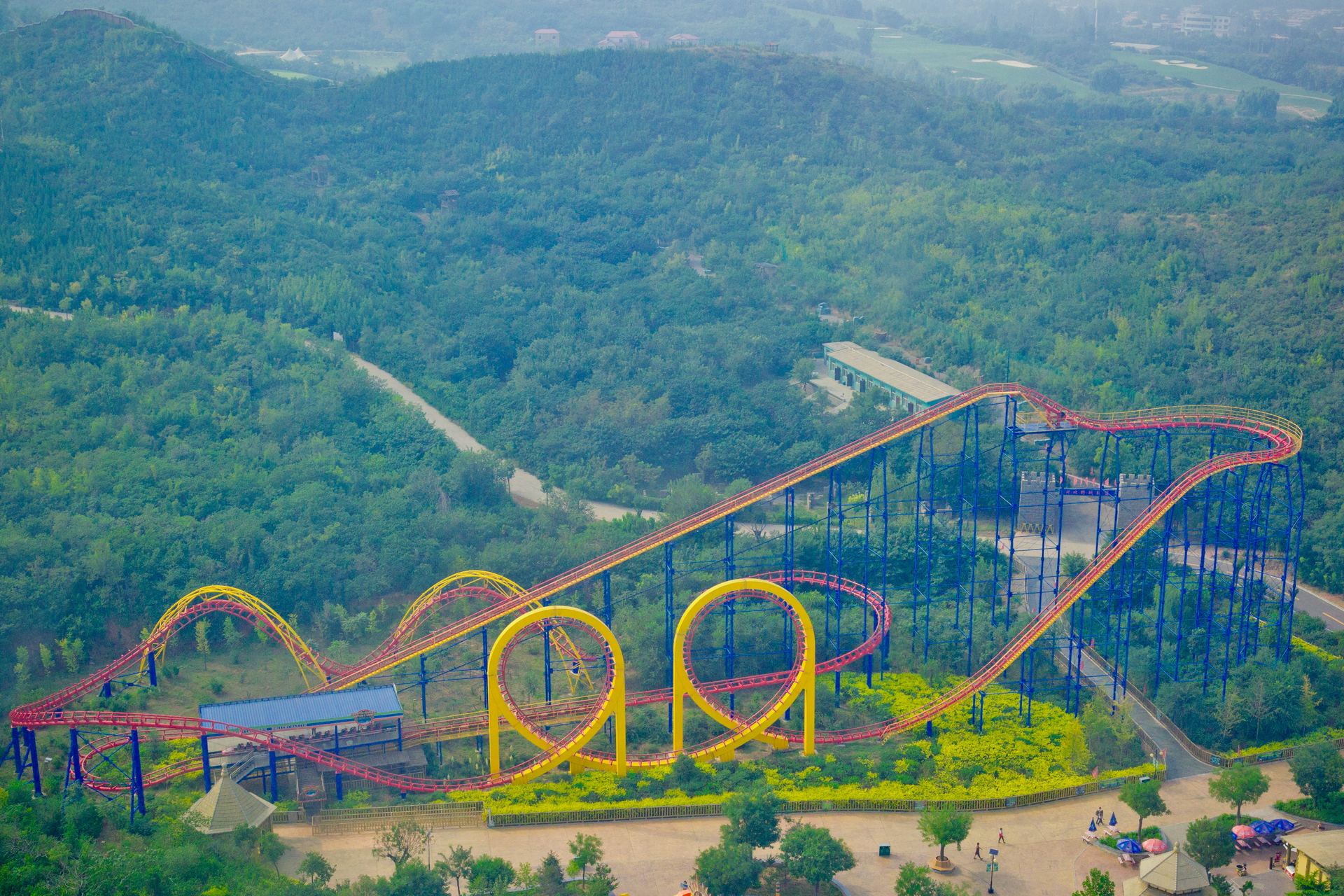
The full cost breakdown
Main Components of a Coaster Ride
Understanding a coaster ride’s main components helps in planning and budgeting. Each component plays a critical role in the ride’s function, safety, and thrill factor. Here’s a full breakdown of key parts, their roles, and cost estimates (based on a typical family or mid-size coaster — like a Wacky Worm or a small thrill ride).
Why Customize with IP or Themed Designs?
Choosing a themed or IP-based roller coaster goes far beyond just adding visual flair—it can be a game-changer for your park’s popularity and bottom line. When you wrap a ride in a beloved movie, cartoon, or original story (think Universal’s “Jurassic World” coaster or Disney’s countless character-themed rides), it immediately becomes a must-see attraction that generates buzz both in the park and across social media.
Some distinct benefits include:
- Boosted Attendance: Iconic themes have the power to draw new and repeat visitors, turning your coaster into a destination in itself.
- Shareability: Themed rides are Instagram and TikTok magnets, amplifying word-of-mouth marketing and helping your park trend online with every guest selfie or ride-through video.
- Unique Identity: A custom IP design ensures your ride stands out from generic models, making your park memorable and distinct in a crowded market.
- Increased Spending: Guests enticed by thematic rides are more likely to buy related merchandise, snacks, and souvenirs, bumping up overall revenue.
- Broad Appeal: Well-chosen themes resonate with families, teens, and superfans alike, helping you attract a diverse crowd.
For parks aiming to maximize both guest experience and business potential, investing in themed or IP-based roller coasters is often the smartest route—balancing entertainment value, free publicity, and long-term economic return.
How Material Choices Impact Coaster Ride Costs
Choosing between steel and wood for your roller coaster is one of the biggest decisions you’ll face—and it carries a hefty price tag either way. Materials don’t just affect how the ride looks and feels; they drive costs and longevity, too.
Steel Coasters: Steel is the go-to for smooth, looping layouts and wild designs like what you see on B&M or Intamin thrill machines. Steel offers superior durability, intense twists, and lower maintenance down the road, but you’ll pay for those perks. Steel coasters often start around $7 million and can soar past $20 million for larger attractions with signature elements or custom trains.
Wooden Coasters: Wood is classic—think the clattering fun of Coney Island’s Cyclone or the wooden giants from Great Coasters International. Wooden coasters usually cost less to build, thanks to less expensive materials and simpler support structures. For a mid-sized wooden ride, you might be looking at costs in the $3 million–$6 million range. However, they often require more regular maintenance, repainting, and occasional board replacements to keep running safely.
- Steel = higher upfront cost, less regular maintenance, smoother ride, more complex shapes.
- Wood = lower construction costs, classic feel, more ongoing upkeep, and limitations on extreme elements.
Material choice isn’t just about budget—it shapes your guests’ entire experience and impacts long-term operating costs, so weigh your options carefully before committing to concrete foundations and those first deliveries of steel beams or timber planks.
Design & Engineering Costs
Before a single beam is bolted or a splash of paint is added, every coaster project kicks off with the crucial design and engineering phase. This stage covers concept sketches, 3D renderings, technical calculations, and plenty of back-and-forth revisions with engineers to ensure that the ride isn’t just exciting on paper but actually safe, compliant, and buildable.
- Design Development: This includes dreaming up the theme, layout, and overall aesthetics—think colorful 3D models, creative twists, and those signature coaster silhouettes.
- Engineering Services: Structural engineers then work their magic, crunching the numbers so that every dip and corkscrew stays securely on the track and meets local and international safety codes.
Cost Range: For a typical family or mid-size ride, expect the full design and engineering phase to run anywhere from $200,000 to $1 million. The range depends on things like:
- The complexity of the track layout and theming
- Number of design revisions required
- Geographic location and local code requirements
It might seem hefty, but investing in solid design and rock-solid engineering sets the tone for a reliable, exhilarating, and safe ride—whether you’re aiming for a simple Wacky Worm or something twisting enough to make a Six Flags engineer blush.
What Each Component Does
1. Track & Structure → Defines the ride experience
2. Train → Moves guests safely along the ride
3. Lift/Launch → Gives the ride its initial energy
4. Brakes → Ensures safe deceleration at the end
5. Control System → Runs the ride safely and automatically
6. Electrical → Powers everything
7. Theming → Attracts attention and boosts immersion
8. Foundations → Keeps the whole system stable and secure
9. Safety Systems → Protects passengers
10. Maintenance Tools → Keeps the ride running long-term
Typical Lifespan of a Roller Coaster
Most roller coasters are designed to thrill guests for a solid 15 to 25 years before major overhauls become necessary. With regular maintenance and timely upgrades—think fresh tracks, new control tech, or improved safety systems—they can even outlast their initial estimates. This long service life makes roller coasters not just an exciting attraction, but also a smart long-term investment for parks and operators.
How Roller Coasters Drive Economic Impact
Just as the track, train, and theming all work together to make a memorable ride, roller coasters are powerhouses for a theme park’s bottom line. Here’s how:
- Crowd-Pleaser Appeal: The latest thrill machine often becomes the star attraction, drawing crowds in droves—think of the lines for VelociCoaster or Steel Vengeance on opening day.
- Elevated Per Capita Spending: The buzz around a new coaster doesn’t just sell tickets. Nearby snack stands, souvenir shops, and quick-service eateries soon see longer lines, as guests stick around the area.
- Media and Branding Magic: A record-breaking coaster often grabs headlines, scooping up industry awards and firing up social media. This publicity keeps a park’s name in the spotlight and helps define its identity.
- Premium Experience Upsell: From fast passes to exclusive previews, a marquee coaster lets parks introduce premium pricing tiers. Fans eager to be first on board are often willing to pay extra.
- Long-Term Value: With careful upkeep, a major coaster can thrill riders for decades, offering reliable returns and justifying its upfront investment.
When all these factors come together, a roller coaster isn’t just about speed and airtime—it becomes a cornerstone of profitable park operations.
How Long Does It Take to Build a Roller Coaster?
A typical roller coaster project, from conception to grand opening, will often span anywhere from one to two years. This might sound lengthy, but when you factor in all the moving pieces—from the design blueprints and permits to the nuts and bolts holding the track together—it starts to make sense.
Several key factors can stretch (or sometimes shrink) this timeline:
- Ride Size and Complexity: Is it a record-breaking steel behemoth or a modest family coaster? The bigger and fancier the ride, the longer it takes.
- Weather Woes: Construction crews are at the mercy of Mother Nature. Rain, snow, and extreme temperatures can all throw a wrench into progress.
- Permitting and Inspections: Local regulations and mandatory safety reviews can create wait times, especially if paperwork gets bogged down.
- Materials and Manpower: Delays in receiving steel, electronics, or specialized labor can halt construction in its tracks—literally.
- Coordination Among Experts: Designers, engineers, contractors, and park operators all need to stay in sync to keep things moving forward.
Strong planning and communication from day one are crucial to keeping the build on schedule and ensuring that, whether it’s a looping launch coaster or a gentle wooden classic, the end result is both thrilling and safe.
Total Costs of A Coaster Ride
How the Coaster Type Affects the Price Tag
The choice between a wooden and a steel coaster isn’t just a matter of thrills—it can make a serious dent in your budget. Wooden coasters, with their simpler construction and readily available materials (think classic Coney Island vibes), tend to sit at the lower end of the price scale. On average, you’ll find wooden coasters clocking in between $3 million and $6 million.
Steel coasters, on the other hand, are where budgets get stretched. Their twisting tracks, advanced engineering, and potential for loops and spirals push costs much higher—anywhere from $7 million to well over $20 million, depending on the scale and complexity. So, whether you want nostalgic charm or cutting-edge adrenaline, your coaster dreams—and your wallet—will steer the way.
How Roller Coasters Become a Park’s Lasting Investment
Roller coasters aren’t just sensational crowd-pleasers—they’re foundational assets that shape a park’s future in more ways than one.
- Draw Power for Decades: A major coaster can keep visitors pouring through the gates for 15, 20, even 25 years. Classics like Cedar Point’s Millennium Force or Six Flags’ Goliath are still headline acts long after their grand openings.
- Boosting Everything Around Them: When a coaster goes up, the parks often see a ripple effect—nearby eateries, gift shops, and games all benefit from increased foot traffic.
- Driving Premium Revenue: With a new marquee ride, parks can justify higher ticket tiers, VIP line access, or bundled season passes—just like Universal’s VelociCoaster helped drive premium sales.
- Permanent PR Machine: Award-winning or record-setting rides fuel media attention and keep the park in the spotlight well beyond the opening season, continually refreshing interest.
- Brand Building: Over time, a signature coaster becomes part of a park’s identity, helping it stand out in a crowded market and develop a loyal fanbase.
In short, installing a roller coaster can be one of the savviest business moves for any amusement park—delivering thrills (and returns) for years to come.
Example Payback Timelines for Roller Coaster Investments
Now, let’s talk about how quickly those big coaster dollars might come back to you. While ticket prices in the U.S. Generally fall between $7 and $12 per ride (with the very flashiest attractions sometimes tipping toward $17.50), your return on investment depends on more than just ticket sales alone.
- About 70% of a coaster’s cost is typically recouped through ticketing and in-park purchases—think snacks, souvenirs, and your cousin trying to win that impossibly large plush unicorn.
- The remaining 30% comes in the form of increased park visibility, more visitors lured through the gates, and that hard-to-quantify excitement that keeps your park top-of-mind (and in countless Instagram feeds).
Here’s how that math plays out for coasters at various investment levels, based on common attendance:
Investment Level Revenue Target (70% Recovery) Riders Needed Share of 1M Annual Riders Typical Payback Period $5 million $3.5 million 350,000 35% Around 1 year $10 million $7 million 700,000 70% 1–2 years $20 million $14 million 1,400,000 140% 2–3 years These numbers assume steady attendance (around a million guests per year), but your actual timeline may vary. A wow-worthy ride like Kingda Ka at Six Flags Great Adventure might hit those milestones faster just by being a must-see on every coaster fan’s bucket list, while a more modest family coaster takes a bit longer to pay for itself.
And remember: The payback period isn’t just a math game—it hinges on your park’s marketing savvy, the ride’s uniqueness, and how well it captures the magic that keeps thrill-seekers coming back for more.
When Does a Roller Coaster Pay for Itself?
Let’s talk about the bottom line. After all, even the wildest coaster on the boardwalk has to earn its keep.
For most U.S. Roller coasters, ride tickets fall somewhere between $7 and $12 a pop (think: what you’ll pay at your favorite Six Flags or local amusement park—though headline-grabbing coasters sometimes climb closer to $17 for a prime seat). Operators typically recover about 70% of a coaster’s investment through ride tickets and all the snacks, photos, and plush dragons guests grab along the way. The remaining 30% comes not from tickets, but from the increased draw, media buzz, and overall brand glow that a new coaster brings to a park.
What Does That Mean in Real Terms?
- For a coaster that costs $5 million: You need to sell around 350,000 $10 tickets to cover the ticketed side (that’s roughly one third of a million riders).
- A $10 million investment? Target closer to 700,000 rides at $10 each.
- Go all out and spend $20 million, and you’ll need 1.4 million thrill-seekers.
Assuming your park draws a cool one million visitors a year, a $5 million coaster could recoup that ticket-based investment in under a year. The pricier projects—say, $10–20 million—usually see the payback period stretch to one, two, or even three years, depending on whether you’re the next Disneyland or still building your legend.
The upshot: The more exciting your ride, the faster your guests line up, and the sooner your investment comes racing back.
How Roller Coasters Drive Revenue Beyond the Ride
While installing a new coaster is a hefty investment, its financial impact stretches well beyond ticket sales for the ride itself. Here’s how:
1. Surrounding Businesses Get a Boost Placing a marquee attraction—think of something akin to Cedar Point’s Millennium Force or Disney’s Guardians of the Galaxy coaster—instantly turns the neighboring area into prime real estate. Gift shops churning out ride-themed merchandise, snack stands selling “coaster cones,” and even sit-down restaurants boasting a view of the first drop all see a surge in business. The excitement of the new ride drives up spending per guest within these zones, effectively turning every nearby register into a beneficiary of the coaster’s popularity.
2. Premium Ticketing Finds Its Justification Fans eager to be among the first to ride are often willing to shell out for perks: fast pass lines, early bird ride access, or upgraded season tickets. Parks can introduce VIP packages or priority boarding options, and visitors bite—a win-win that pads revenue without changing much operationally. Essentially, a headline-worthy coaster gives parks the leverage to introduce (and maintain) higher-priced ticket tiers, catering to both thrill-seekers and the time-conscious.
3. Long-Term Value Creation Over time, a signature coaster continues to anchor traffic to the park, justifying ongoing premium offerings and retaining tourist interest year after year. The surrounding businesses and premium ticket categories keep benefiting, ensuring a steady revenue lift as long as the coaster remains a headliner.
Real-World Roller Coaster Investments: Examples and Outcomes
Let’s ground those numbers in reality with some notable case studies. Whether you’re aiming for a family-friendly attraction or the next big thrill, these real-world projects demonstrate the range of budgets and the returns park owners can expect.
Holiday World – Good Gravy! (2024)
- Investment: Roughly $10 million launched North America’s first family Boomerang coaster.
- Impact: Opened up exciting new territory for family audiences and generated substantial media buzz, ultimately leading to stronger ticket sales and a healthy spike in gift-shop and concession sales.
Dollywood – Big Bear Mountain (2023)
- Investment: The largest single outlay in the park’s history, clocking in at about $25 million and nearly 4,000 feet of track.
- Impact: Became the park’s new headliner, reinvigorated the Dollywood brand, and reeled in tourists from out of state, helping to boost both park attendance and regional tourism revenue.
China – Community Family Park, Larva Fruitland Mini Coaster (2024)
- Investment: Less than $30,000, making up about 20% of the park’s development budget.
- Impact: This compact ride stole the show among young visitors, recouping its entire investment in ticket sales within just four months—proof that even a small coaster can pack a major financial punch for a community attraction.
Uzbekistan – Resort Amusement Park, Little Kitchen Team Mini Coaster (2025)
- Investment: Accounted for roughly 30% of the park’s procurement spend.
- Impact: Its popularity delivered both direct revenue and an online buzz that funneled visitors into the broader resort, enhancing overall profitability.
Takeaway: Beyond ticket sales, the right roller coaster can boost food, retail, and repeat visits—and serve as a powerful marketing engine courtesy of rider photos and social media shares. For parks seeking a signature draw, themed coasters and integrations with popular brands (or original IP) can unlock significant added value, fueling both visitor excitement and local economic impact.
Recouping Your Investment: Can a Coaster Pay for Itself?
Absolutely—when thoughtfully planned, a new roller coaster can do more than just thrill your guests. Over time, the right coaster often helps recover its initial costs by boosting ticket sales, generating buzz, and driving repeat attendance. The key ingredients to a successful payoff include:
- Ride Appeal: Unique elements or standout thrills keep visitors coming back (think inversion fanatics and families alike).
- Guest Experience: A smooth, enjoyable day—coaster included—means word-of-mouth praise and glowing TripAdvisor reviews.
- Smart Marketing: Teasers, launch parties, and seasonal campaigns all help tap into the public’s curiosity (and wallets).
- Well-Timed Promotions: Discounts and special events can fill gates even during slower months.
Ultimately, thorough market research and solid attendance projections should set expectations. A crowd-pleasing ride backed by savvy promotion often does more than pay for itself—it can become your park’s signature attraction, lifting attendance across the board.
The Revenue Impact of High-Profile Roller Coasters
Building a major attraction like a record-breaking roller coaster—think Steel Vengeance at Cedar Point, for example—often comes with a multi-million dollar price tag, sometimes exceeding $7 million. However, this isn’t just about the ride itself. These headline-grabbing coasters are powerful magnets for thrill-seekers and families alike, driving up both ticket sales and overall park attendance.
But the financial effects go deeper than just the crowds at the gate. New, high-profile rides tend to:
- Increase repeat visits, as guests return for new experiences.
- Boost merchandise and concession sales, since visitors often want a t-shirt or souvenir to commemorate their conquest of that epic ride.
- Elevate a park’s profile, making it more likely to be featured in news stories, top ten lists, and vacation planners’ social feeds—free marketing, essentially.
While the upfront investment is significant and ongoing costs (maintenance, staffing, operational expenses) aren’t trivial, the right addition can deliver a notable uptick in revenue. For many parks, the construction of a flagship roller coaster becomes a calculated move to outperform competitors and turn heads in an industry built on thrills.
Why Choose Dinis Thrill Rides
As a leading amusement ride manufacturer, Dinis specializes in designing, manufacturing, and delivering high-quality and innovative amusement rides for theme parks, amusement parks, and entertainment centers worldwide. With years of industry experience, a strong reputation, and a commitment to safety, quality, and customer satisfaction, we are your trusted partner in creating thrilling and reliable rides.
Sales Team – Your Trusted Investment Advisor
Our professional sales team is knowledgeable, responsive, and experienced in helping clients choose the perfect amusement ride for their needs.
Consultative Approach: We understand your market, budget, and target audience to provide customized solutions.
Market Insights: Our team provides detailed market analysis to help you make informed investment decisions.
Multilingual Support: We serve clients worldwide with multilingual communication, ensuring smooth cooperation.
Customer-Centric Service: We prioritize your needs, offering tailored ride recommendations and transparent pricing options.
Just contact us for more details.


